
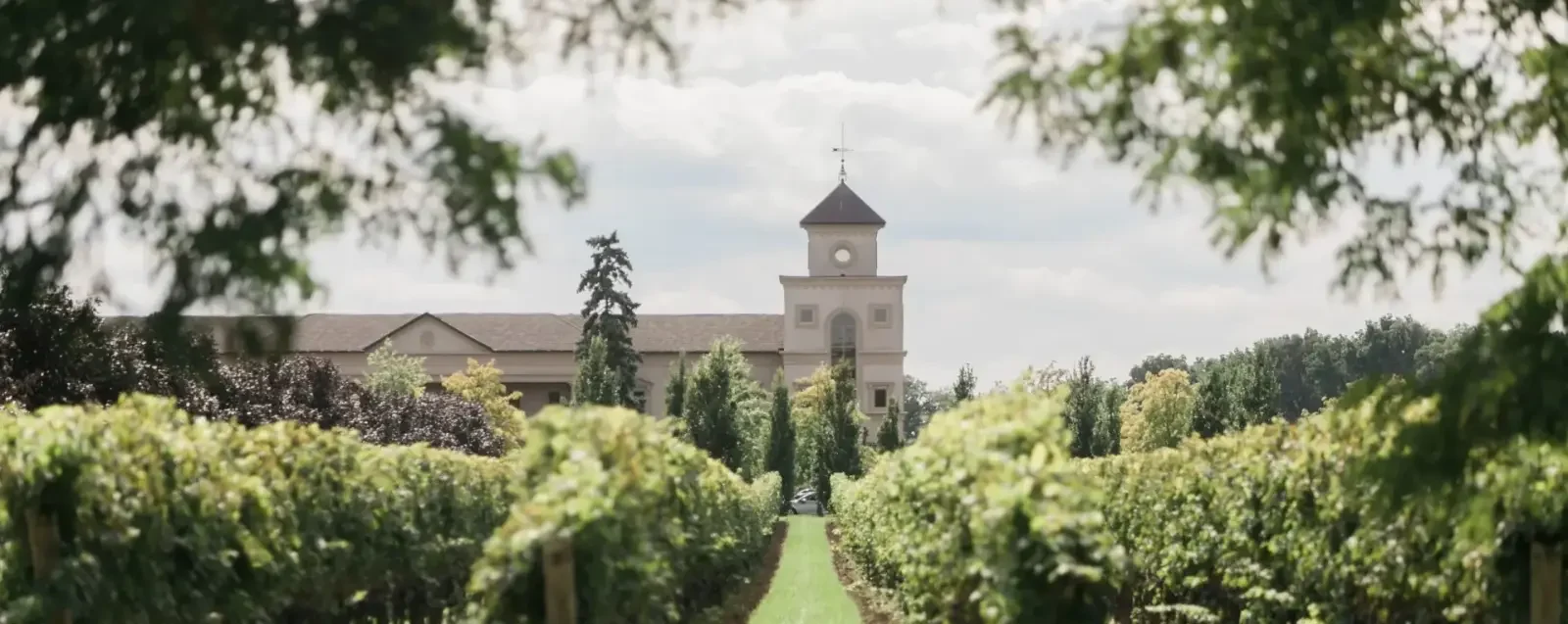

To understand why Niagara matters in wine, it helps to begin with a simple idea: vines like stress, but not too much. The best wine regions are rarely the easiest places to farm. They are places where climate, soil, slope, and season challenge the vine just enough to produce grapes with flavour, structure, and a clear sense of place. That balance is what wine people mean when they talk about terroir, and in Niagara, terroir is remarkably vivid.
At first glance, Niagara does not look like an obvious wine region to international visitors. Canada still surprises people as a serious wine producer. But the Niagara Peninsula sits at roughly 43 degrees north latitude, in a cool climate band shared by some of the world’s respected wine regions. It benefits from a combination of long summer daylight, significant day night temperature shifts, and a growing season shaped by both Lake Ontario and the Niagara Escarpment.
The lake does the work
In accessible terms, Lake Ontario functions like a giant temperature regulator. Water warms and cools more slowly than land, which means the lake helps smooth out extremes. In spring, its cooling influence delays bud break, which is a very good thing in a place where an early warm spell could otherwise tempt vines into growth just before a frost. In autumn, the lake releases stored warmth back into the air, helping extend the growing season and giving grapes more time to ripen fully before serious cold sets in. That extra hang time is where nuance develops, including aroma, acidity, texture, and the kind of flavour complexity that cooler regions do especially well.
Then there is the Escarpment. This long limestone ridge is not just scenic backdrop. It shapes airflow, slope, drainage, and pockets of temperature throughout the peninsula. Cold air drains downhill, which can help reduce frost damage in some vineyard sites, while elevation and aspect create meaningful differences between one block and the next. Add in varied soils, often including clay, silt, sand, and limestone influence, and Niagara becomes less one wine region than many small ones layered together. That is why VQA Ontario recognizes not only the larger Niagara Peninsula appellation but also sub appellations that reflect these distinctions.
What makes icewine icewine
This interplay of lake, escarpment, and site variation is also what makes Niagara one of the world’s great homes for icewine. True icewine is not simply sweet wine with a romantic name. In Ontario, it is tightly regulated under the VQA system, and grapes must freeze naturally on the vine at minus 8 degrees Celsius or colder before harvest. No artificial freezing is allowed for a wine labelled VQA icewine. When those frozen grapes are pressed, the water remains locked as ice and the juice comes out highly concentrated, producing wines of extraordinary sweetness balanced by fresh acidity.
That last part matters. The best Niagara icewines are not sugary curiosities. They are vivid, precise, and lifted, often showing apricot, citrus, honey, tropical fruit, or red berry notes depending on the grape variety. Vidal has long been the classic workhorse because of its winter hardiness and ability to retain acidity, but Riesling and Cabernet Franc also produce striking expressions. For many wine drinkers around the world, icewine remains their first introduction to Niagara. It is the bottle that puts the region on the radar.
Beyond the ice
Yet Niagara’s modern story is no longer only about icewine. It is increasingly about confidence across the full range of cool climate wine styles, from taut Rieslings and Chardonnays to Pinot Noir, Cabernet Franc, and sparkling wines. The VQA designation helps explain why that confidence travels. VQA, or Vintners Quality Alliance, is Ontario’s appellation system, and it guarantees geographic origin while requiring wines to meet compositional, labelling, and review standards before release. For consumers, it is shorthand for authenticity. For producers, it is a framework that protects place.
That framework is now evolving alongside the climate. In a recent move, Ontario added 24 new grape varieties to the list eligible for VQA certification, a change widely seen as both practical and forward looking. Some of these grapes are better adapted to disease pressure or cold conditions, which means wineries may be able to reduce sprays and respond more effectively to changing weather patterns. One Ontario winemaker cited in reporting on the change noted that newer varieties with North American lineage can be more resilient to disease and better suited to reaching full ripeness by season’s end. This is not a rejection of Niagara’s established grapes. It is an acknowledgment that sustainability and quality increasingly need to work together.
This is where Niagara becomes especially compelling. It honours heritage while making space for experimentation. The region’s reputation was built in part on proving that world class icewine could come from Canadian winters and that cool climate table wines could achieve precision and elegance here. Now, the next chapter is being written by growers and winemakers who are thinking as much about resilience as they are about style, including canopy management, soil health, spray reduction, and future friendly planting decisions in a region that already knows how much weather matters.
A region to watch
For wine lovers, that makes Niagara more than a picturesque weekend in vineyard country. It becomes a place to watch. Few regions show the connection between climate and taste quite so clearly. Fewer still offer the drama of frozen harvests, the rigour of appellation standards, and the creative energy of a sector willing to adapt without losing its identity.
The world is paying attention. Niagara no longer feels like an outlier. It feels like a region with something specific to say, and the wines to say it with.
Niagara’s Terroir Story: From Icewine to Innovation appears in the inaugural issue of Destination Niagara magazine, alongside features on the falls, the food, the heritage and all twelve municipalities.
Coming for the harvest? Build your trip → or see what is on this September →


